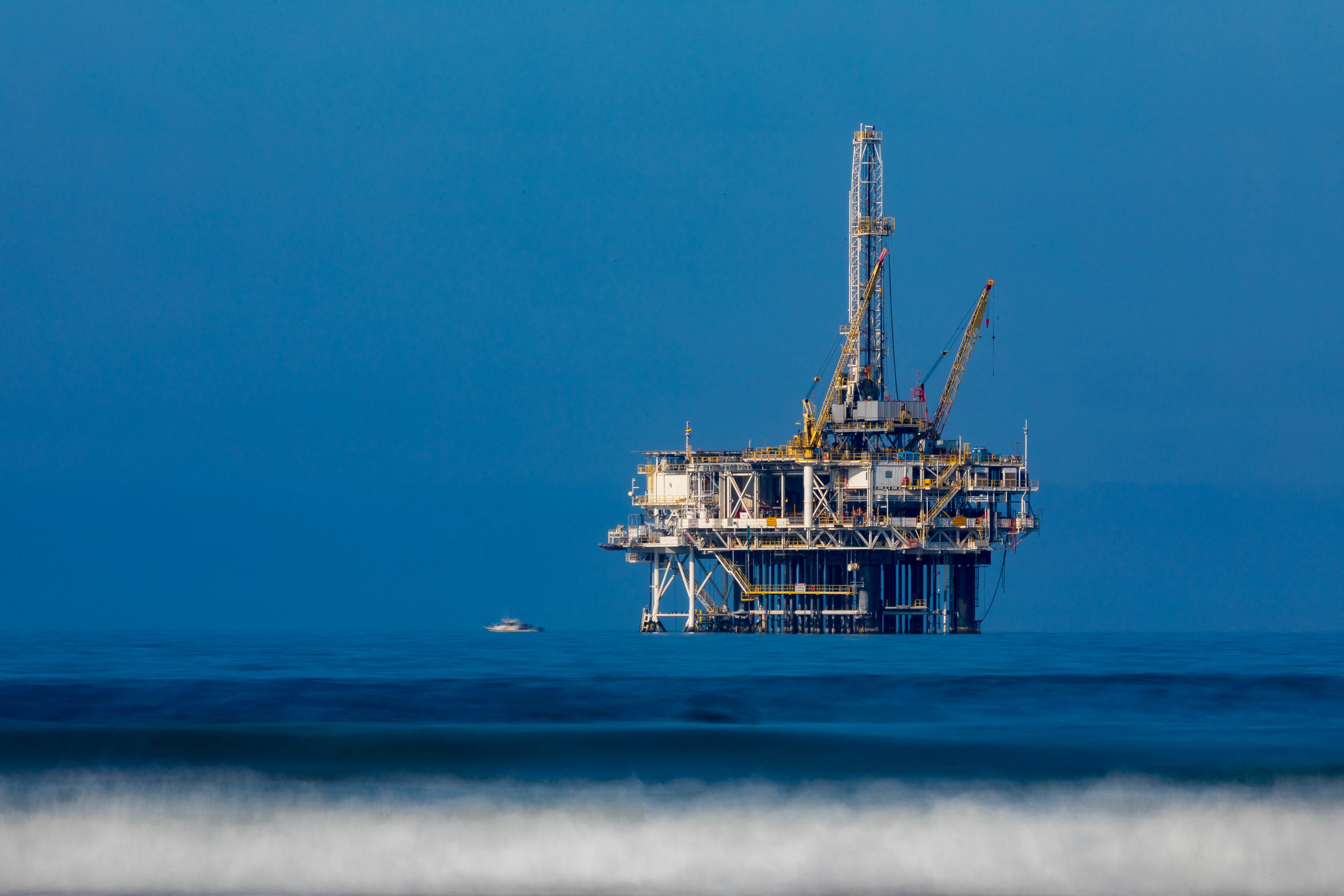
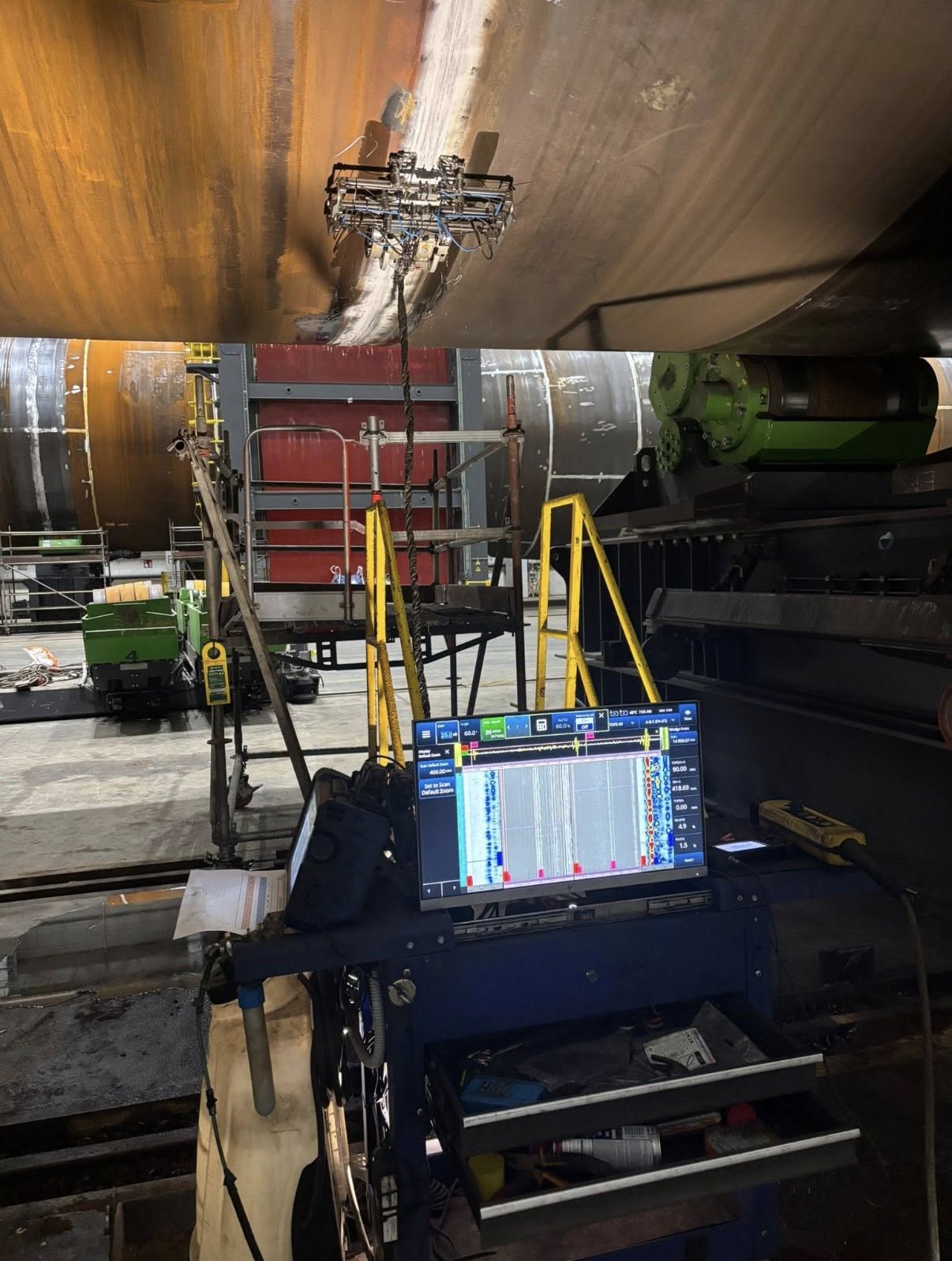
Offshore wind structures are getting bigger, thicker, and more demanding to inspect.
XXXL monopiles can exceed 10 m in diameter and 100 mm wall thickness, with long seam welds, circumferential welds, and complex fabrication stages. The inspection challenge isn’t just finding defects — it’s doing so accurately, efficiently, and with full traceability, in environments where time and access are limited.
One question I’m regularly asked by clients is:
“Should we use conventional UT, PAUT, or ToFD?”
The answer isn’t always straightforward because each technique has its place.
Choosing the wrong one can mean delays, missed indications, or unnecessary cost.
Choosing the right combination delivers confidence and productivity.
Here’s how I explain it.
Conventional Ultrasonic Testing (UT)
Conventional UT remains the backbone of many inspection programmes. It uses single-element probes and angle beams to manually scan welds and detect internal flaws.
Strengths
Simple and reliable
Cost-effective
Quick to deploy
Excellent for general flaw detection
Ideal for smaller welds or straightforward geometries
Limitations
Operator dependent
Limited data recording
Slower on long weld runs
Less accurate sizing of complex defects
Reduced coverage in very thick sections
For thinner sections or routine inspections, conventional UT works well. However, on large monopiles with heavy wall thickness, productivity and defect characterisation can become challenging.
Phased Array Ultrasonic Testing (PAUT)
PAUT uses multiple elements fired in sequence to steer and focus the beam electronically, creating detailed cross-sectional images of the weld.
Think of it as moving from a single torch to a floodlight.
Strengths
Wide coverage in fewer passes
Faster scanning of long welds
High probability of detection
Accurate defect sizing
Full digital recording and traceability
Ideal for automation
Limitations
Higher equipment cost
Requires higher technical competence
More complex setup
For monopile fabrication, PAUT is often the most efficient solution. It’s particularly effective for:
Heavy wall thickness
Circumferential and long seam welds
Production environments
Situations requiring documented evidence
In my experience, PAUT provides the best balance of speed, coverage, and quality for most offshore wind applications.
Time of Flight Diffraction (ToFD)
ToFD works differently. Instead of reflected sound, it uses tip-diffracted signals to size defects very accurately.
It’s less about finding defects and more about precise measurement.
Strengths
Extremely accurate through-wall sizing
Excellent for crack and lack-of-fusion defects
Fast scanning speeds
Highly repeatable
Well suited to automated systems
Limitations
Less sensitive to certain volumetric defects
Typically used alongside PAUT, not alone
Requires specialist interpretation
For heavy-wall monopiles, ToFD is often paired with PAUT to provide:
Detection (PAUT)
Precise sizing (ToFD)
Compliance with standards such as DNV-CG-0051
This is particularly valuable where monopiles have tight, narrow bevel preparations. The combination gives clients maximum confidence and is increasingly specified in offshore wind standards.
So Which Should You Choose?
In reality, it’s rarely one or the other.
For offshore wind and monopiles, the most effective approach is often:
Conventional UT → small scope or localised checks
PAUT → primary weld coverage
ToFD → accurate defect sizing and validation
The key isn’t the equipment — it’s selecting the right technique for the application.
The ITS Approach
At International Testing Services, we focus on engineering the inspection, not just performing it.
With multiple PCN Level 3s and broad capability across conventional and advanced UT methods, we design inspection strategies that:
Reduce fabrication delays
Increase detection confidence
Provide full traceability
Meet client and project specifications
Improve overall productivity
For large offshore structures like monopiles, that technical planning makes all the difference.
A Personal Note
After more than 35 years in NDT, one thing remains true:
technology is only as good as the people applying it.
Understanding when to use UT, PAUT, or ToFD comes from experience, not just equipment.
Our goal at ITS is simple:
Apply the right method, first time, every time.
If you’d like to discuss an upcoming offshore wind or heavy fabrication project, we’re always happy to help.
— Michael Oates
Operations Director
International Testing Services